AI agents with review gates
Tool-using agents for bounded tasks, with queues, monitoring, and approval where risk requires it.
Book a discovery call- Engagement
- Estimated after discovery
- Timeline
- Phased after discovery
When this is the right step
Your team retypes what already exists digitally
Emails, PDFs and forms are read, sorted and entered into a system. The work repeats every day and ties up your best people.
AI trials stay stuck in the chat window
A few people use ChatGPT for drafts. It never became a workflow with data, permissions and review.
Without approval nobody trusts the result
An agent that writes or sends unchecked is a risk. The point where a person approves sensitive steps is missing.
What changes for your team
- Repetitive processing gets handled by the workflow, with people reviewing instead of typing
- Response and handoff times shrink because routing happens automatically
- Triage, extraction, and reporting come out consistent across every case
- Every AI decision stays visible and reviewable, with overrides logged
The Approach
The work starts by separating what AI should draft, classify, extract, or suggest from what a person should approve. The review loop, data flow, prompts, model calls, fallbacks, and operational interface are then designed around that boundary.
The Outcome
Your team gets a faster workflow without handing important judgement to a black box. AI handles repetitive steps, people stay responsible for decisions.

 Rautenberg Pitch EngineRead the case study
What you get
Build focus
- Document extraction and structured data capture from messy inputs.
- Support, lead, or request triage with confidence-aware routing.
- Approval queues where AI drafts and humans review before action.
- Reporting drafts, summaries, and internal handoff notes.
- RAG systems and custom assistants grounded in your own knowledge base.
- Monitoring, logging, and fallback paths for production use.
Included
- Input capture from forms, inboxes, documents, or databases.
- Prompt, model, and tool orchestration for the specific task.
- Human review interface with approve, edit, reject, and escalate actions.
- Structured outputs saved back into the system of record.
- Evaluation checks, confidence signals, and error handling.
- Analytics for throughput, accuracy, and manual override patterns.
The service deck as a PDF
The compact PDF for this service: starting point, approach, scope, and next step on three pages.
Get the deck by email
Enter your email address and the PDF lands in your inbox.
Frequently Asked Questions
- Do you build fully autonomous AI agents?
- Only when the risk profile supports it. Most business workflows work better with human-in-the-loop automation, where AI drafts, extracts, classifies, or recommends and a person approves important actions.
- Can you use our documents or internal knowledge?
- Yes. Retrieval-based workflows and assistants that use your approved knowledge sources can be built. Access control, data handling, and update processes are scoped up front.
- How do you avoid hypey AI experiments?
- The project starts from the workflow and business outcome. If AI does not improve speed, quality, consistency, or cost in a measurable way, it should not be the centre of the build.
Related work
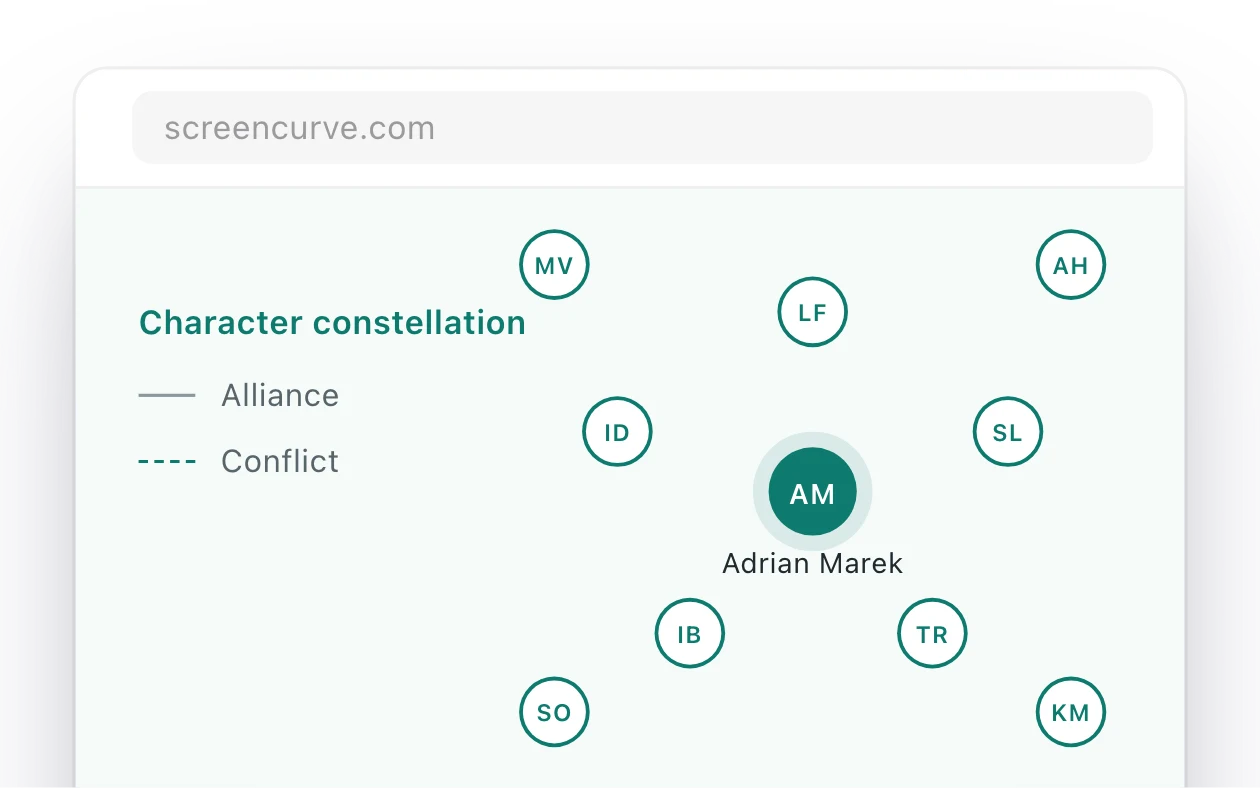
Screencurve: an app that watches an episode and writes its format bible
Screencurve analyses film and TV material and writes the format bible for an episode or a series. Every finding links to the timecode and frame it came from, so a producer can check it in the player.
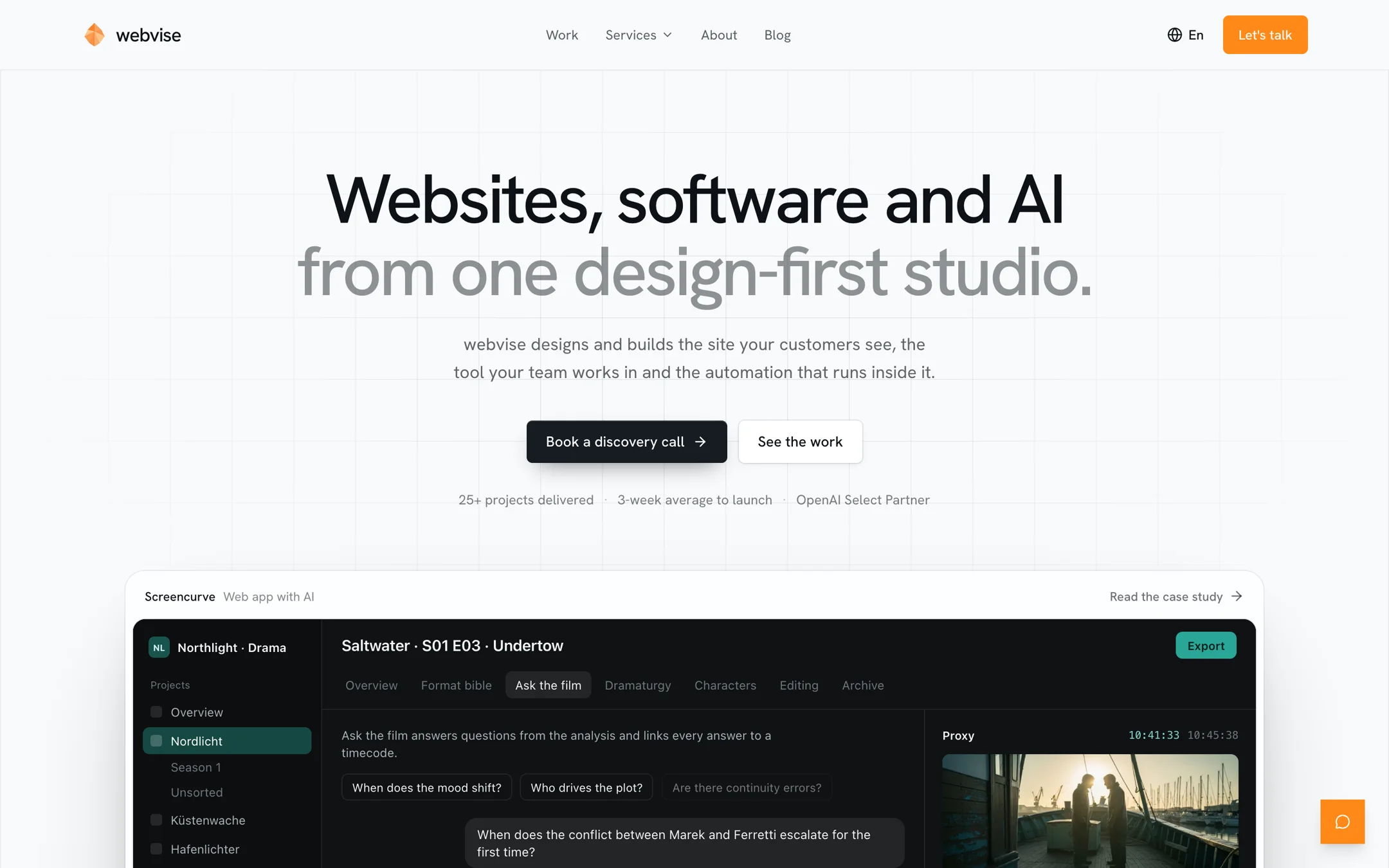
Evolving webvise into a Custom Software and AI Systems Platform
webvise.io is no longer just a portfolio site. It is a production Next.js platform for positioning services, publishing multilingual content, showcasing product surfaces, and routing qualified project conversations.
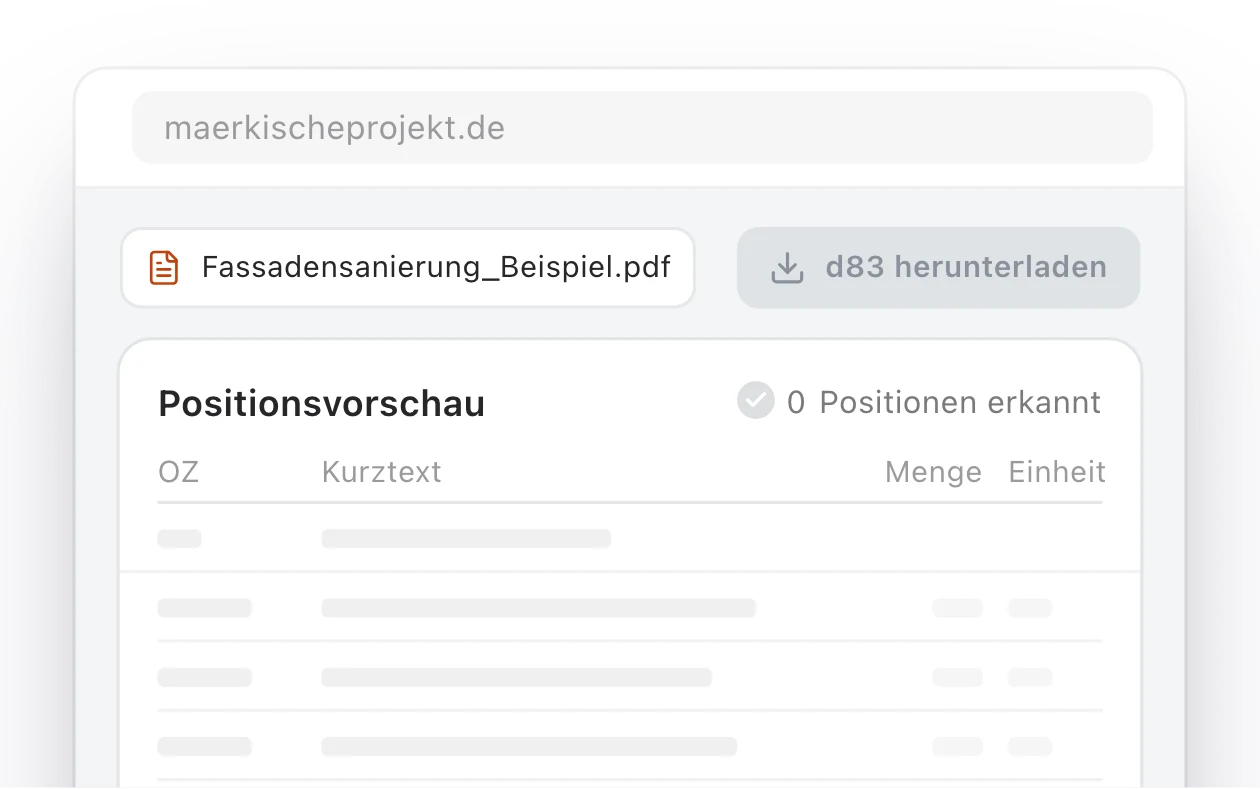
Märkische Projekt Bau: a relaunched website and in-house AI portal for a Brandenburg construction firm
How an outdated website became a modern web platform for Märkische Projekt Bau, and then grew into an internal AI portal that converts tender documents into GAEB files and calculates quantity takeoffs from construction plans.